


Between June 2nd – 5th, COP-PILOT Horizon participated in EuCNC & 6G Summit 2026, held in Málaga, Spain, bringing together researchers, industry leaders, technology providers, and European projects shaping the future of connectivity, edge computing, and digital services.
Throughout the event, COP-PILOT partners demonstrated how the project is advancing interoperable Cloud-Edge-IoT ecosystems, from the orchestration platform that underpins the project to real-world applications in smart cities and connected mobility.
Building a Pan-European Marketplace for Digital Services
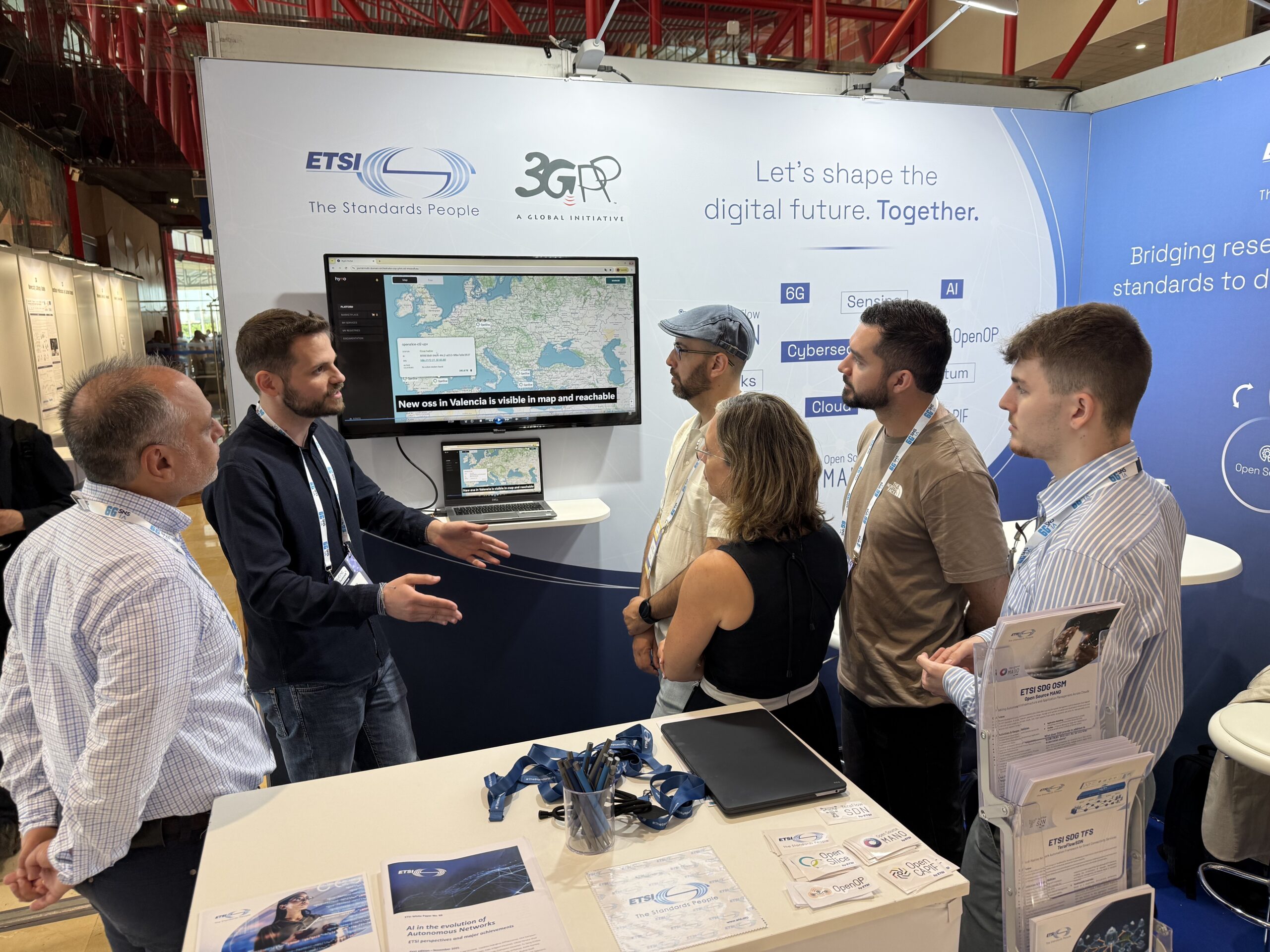
At the ETSI booth, partners from the University of Patras (UOP), P-NET, UBI, and TATA showcased the latest evolution of the COP-PILOT platform and its growing European service marketplace.
The demonstration highlighted COP-PILOT’s distributed orchestration architecture, which enables organizations to manage compute, network, and data resources within their own domains while participating in a larger collaborative ecosystem. Through a network of Domain Orchestrators deployed across Europe and coordinated by an End-to-End Service Orchestrator (ESO), the platform federates services from multiple business sectors into a unified marketplace.
Visitors followed a live onboarding process in which a new Domain Orchestrator located in Valencia was connected to the existing platform. Using ETSI HypO and ETSI OpenSlice, the demonstration showed how services could be discovered, imported, and made available across the COP-PILOT ecosystem through standardized interfaces and service catalogues.
The demonstration illustrated one of COP-PILOT’s core objectives: enabling organizations to share and combine services across domains while preserving autonomy, security, and data sovereignty. Built on open-source technologies including ETSI OpenSlice, ETSI HypO, and OpenZiti, the platform demonstrated how collaborative digital marketplaces can be created at a European scale.
Advancing Smart City Operations Through Interoperable Digital Platforms
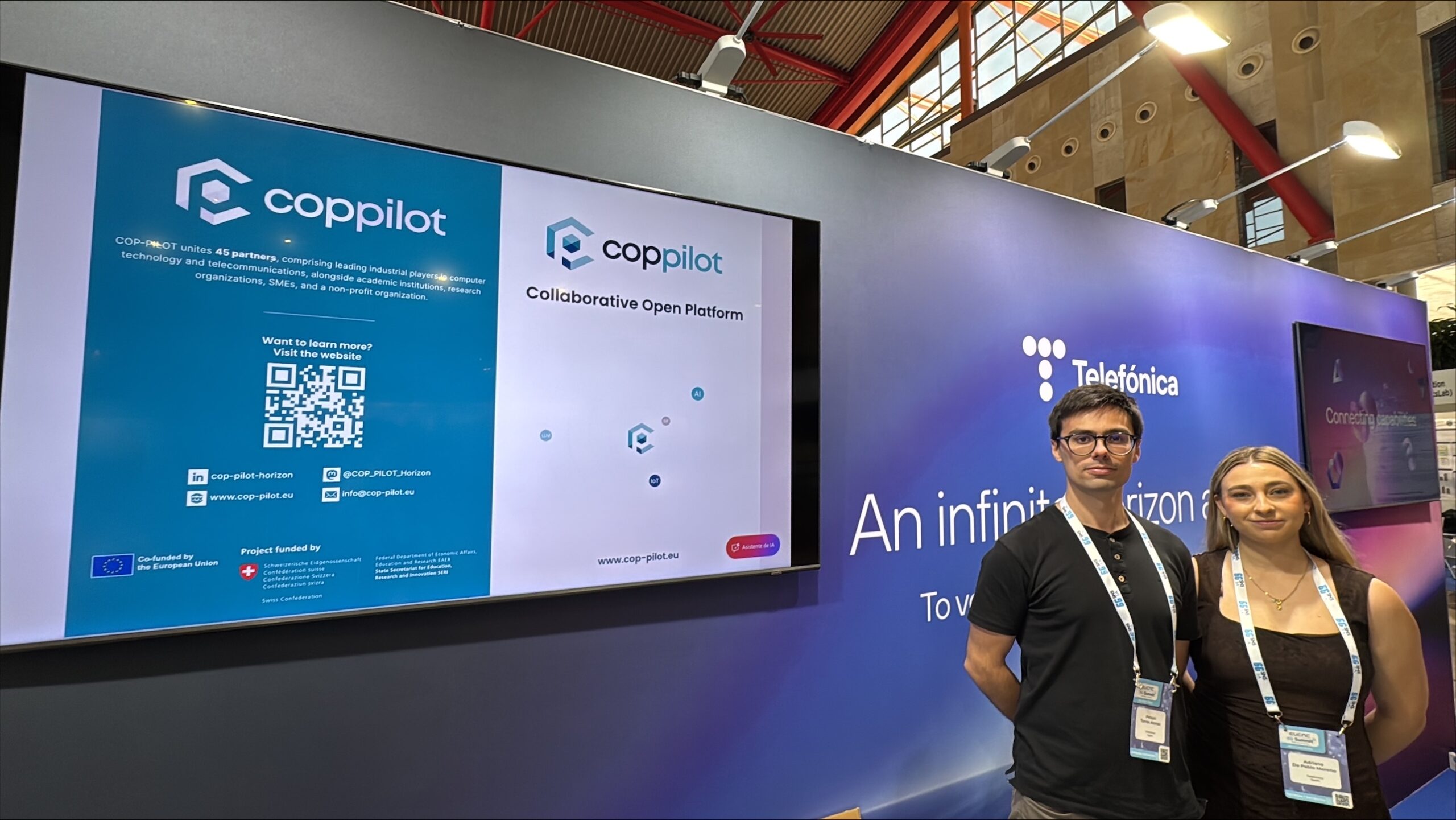
COP-PILOT’s Cluster 2 activities were showcased through a Smart City demonstration led by Telefónica.
The demonstration illustrated how the COP-PILOT platform can support smarter, safer, and more sustainable urban environments by integrating data from traffic systems, environmental sensors, municipal infrastructure, and smart buildings into a unified operational view.
Using interoperable technologies such as Scorpio, Draco, PostgreSQL, Grafana, and secure connectivity mechanisms, the platform enabled real-time monitoring and intelligent decision-making across multiple city services. Several urban use cases were presented, including traffic management, waste management, and environmental monitoring.
The demonstration showed how events detected by sensors and radars can automatically trigger alerts and notify relevant stakeholders, helping city operators respond more efficiently to evolving urban conditions.
A key aspect of the showcase was the platform’s ability to automate the complete service lifecycle, from deployment and monitoring to scaling, while ensuring that data remains under the control of local stakeholders. By combining interoperability with data sovereignty, COP-PILOT demonstrated how future smart cities can securely collaborate across organizational and geographical boundaries.
Exploring the Future of Remote Driving Across 5G Domains
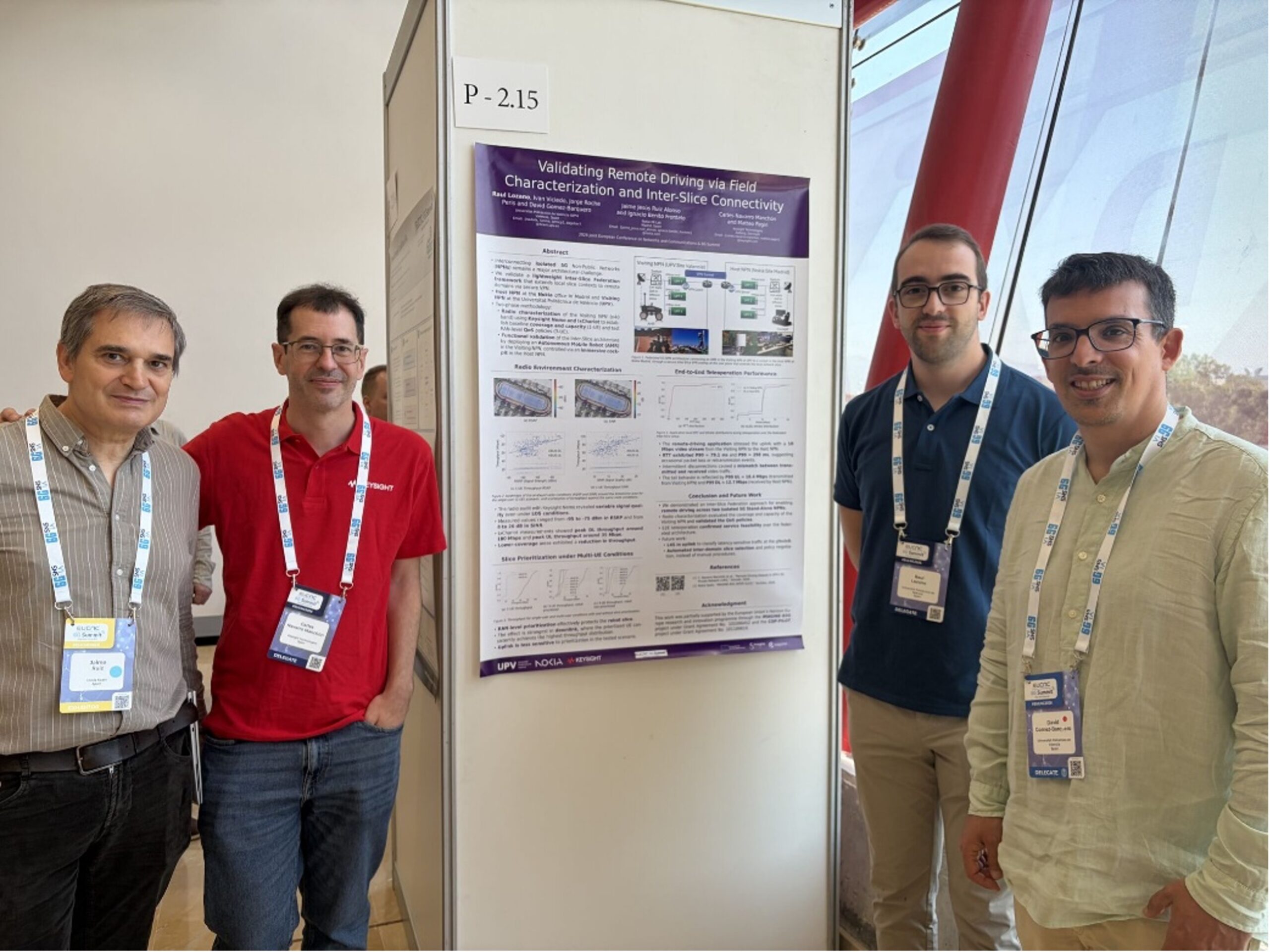
The Cluster 2 team also presented a scientific poster entitled “Validating Remote Driving via Field Characterization and Inter-Slice Connectivity” (read it here).
The work explored how remote driving services can be delivered across two isolated 5G Standalone Non-Public Networks by connecting a robotic vehicle deployed at the Universitat Politècnica de València (UPV) with an immersive cockpit located at Nokia’s facilities in Madrid.
The study investigated the performance of secure inter-slice connectivity using a VPN-based architecture and combined extensive radio environment characterization with end-to-end teleoperation experiments. Researchers evaluated network coverage, capacity, slice prioritization, and application-level performance under realistic remote-driving conditions.
The results demonstrated the potential of advanced 5G connectivity, network slicing, and inter-domain communication to support future teleoperation services and connected mobility applications. The poster generated significant interest among researchers and industry experts attending EuCNC, contributing to discussions on the future evolution of 5G and 6G-enabled services.
Demonstrating the Value of the Cloud-Edge-IoT Continuum
Together, these activities showcased the breadth of the COP-PILOT vision. From federated orchestration and service marketplaces to smart city applications and advanced mobility scenarios, the project demonstrated how interoperable digital infrastructures can support innovation across multiple sectors.
The participation at EuCNC 2026 also provided an important opportunity to engage with the broader European research and innovation community, exchange knowledge with experts in connectivity and distributed computing, and promote COP-PILOT’s approach to secure, scalable, and standards-based collaboration across the Cloud-Edge-IoT continuum.
As the project continues to expand its pilots and technical capabilities, these demonstrations reinforce COP-PILOT’s role in building the foundations for the next generation of interoperable digital ecosystems across Europe.