



Cluster 4 aims to build a connected vineyard–winery–recycling ecosystem using COP-PILOT’s distributed computing continuum. Its scope is to demonstrate how field sensors, production-line data, IoT lifecycle information, and energy-related metrics can operate together to enable smarter irrigation, more efficient winery operations, sustainable sensor reuse, and energy-aware vineyard environments.
Over the past months, Cluster 4 of COP-PILOT deepened its work toward creating a connected vineyard–winery–recycling ecosystem capable of turning agricultural, production-line, and lifecycle data into intelligent, coordinated operations. This phase marked the transition from design and alignment to demonstrable implementation, early piloting, and direct engagement with the wider wine industry community. Together, these activities strengthened the foundations for a new generation of interoperable, data-driven viticulture solutions.
Laying the Digital Foundation Across Domains
In a first stage, the partners focused on redefining and aligning the core processes and workflows that structure Cluster 4. This included clarifying how data moves between domains, how control actions and analytics loops should be orchestrated across edge and cloud, and how each use case contributes to the end-to-end operational flow. These refinements established a shared blueprint for all upcoming pilots and ensured technical consistency across the three domains.
Across the cluster, the core cloud-native infrastructure was deployed with new Kubernetes clusters created in the winery and recycling domains. FIWARE components were installed as the unified data-management layer, and Helm charts were developed to automate deployments and ensure compatibility with OpenSlice and Maestro orchestration services. These setups provide the baseline for scalable application deployment and cross-domain service execution.
Interoperability between domains was a key milestone. Secure communication routes based on OpenZiti were configured and validated, enabling the first successful exchanges of real sensor data between partners. Maestro was integrated with OpenSlice, and the relevant Kubernetes clusters and early applications were onboarded, marking a major step toward coordinated multi-domain orchestration.
During this period, the recycling domain initiated its lifecycle-management integration by aligning device metadata with FIWARE standards and preparing the connectors that will feed sustainability and reuse information into the unified platform. Nokia, as the most recent partner to join Cluster 4, focused on technical alignment and planning for the onboarding of the renewable-powered 5G site, laying the groundwork for its energy monitoring, connectivity management, and edge-infrastructure aspects to be addressed in the next phase.
With this foundation in place, the cluster’s focus shifted toward demonstrating how these capabilities translate into real value, both for viticulture practitioners and for the broader agricultural innovation ecosystem.
Strengthening Connections with the Wine Sector
As the technical work matured, Cluster 4 partners began engaging directly with industry communities to exchange knowledge and validate the project’s direction. One notable moment was the participation of JIG in a working group organised by the Hub for Digitalization and Wine under the Spanish Wine Federation.
During the session, JIG chaired discussions and presented the use case centred on the value of sensor-generated data in bottling lines. By illustrating how production-line data analytics can reduce inefficiencies and support predictive decision-making, the presentation opened a broader conversation about how wineries can begin adopting digitally integrated methods, a core ambition of COP-PILOT.
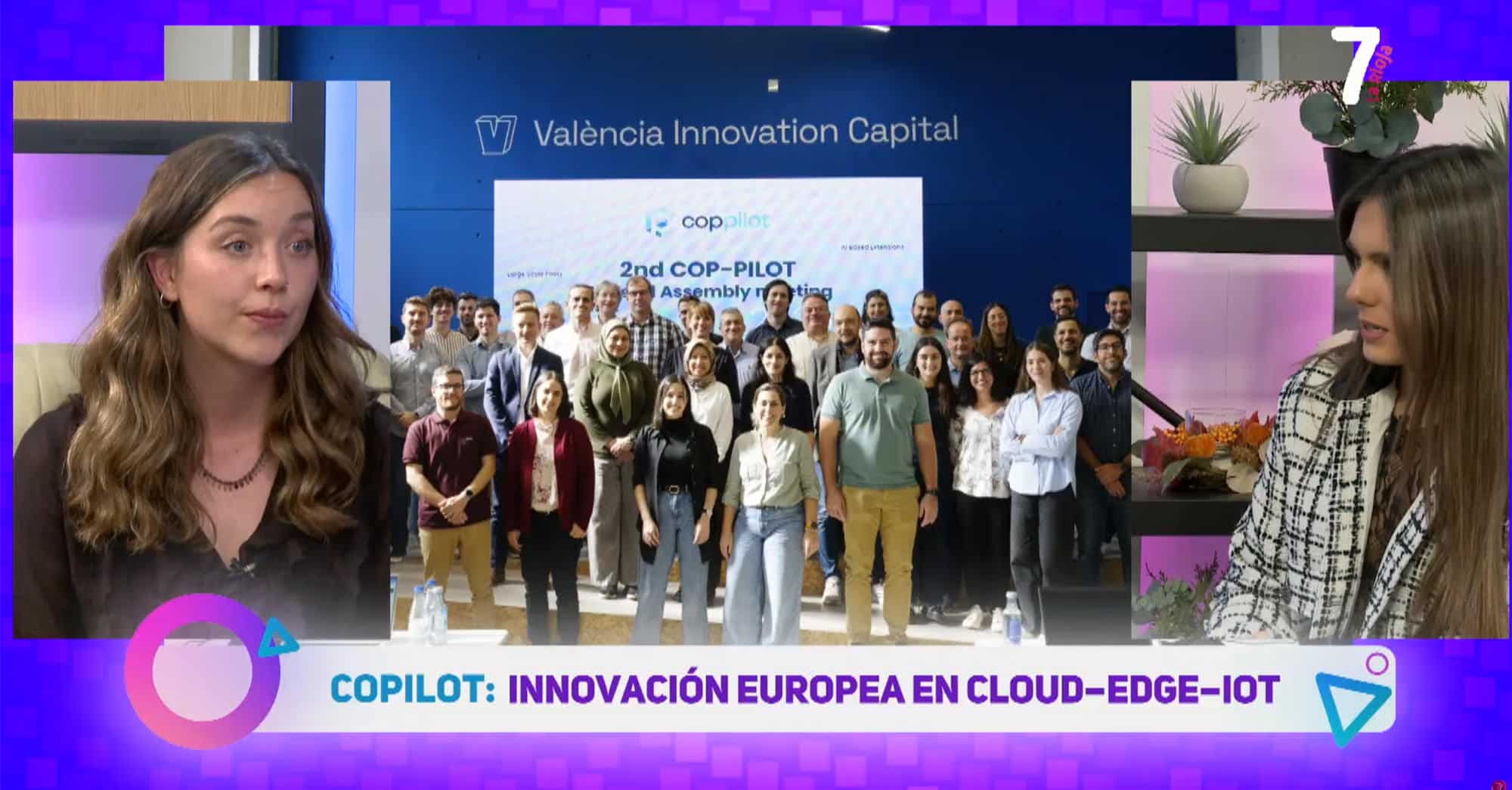
To further amplify awareness in Spain, JIG also secured coverage in El Día de la Rioja, reinforcing the relevance of COP-PILOT in a region deeply rooted in winemaking tradition.
First Demonstration of Cross-Domain Integration
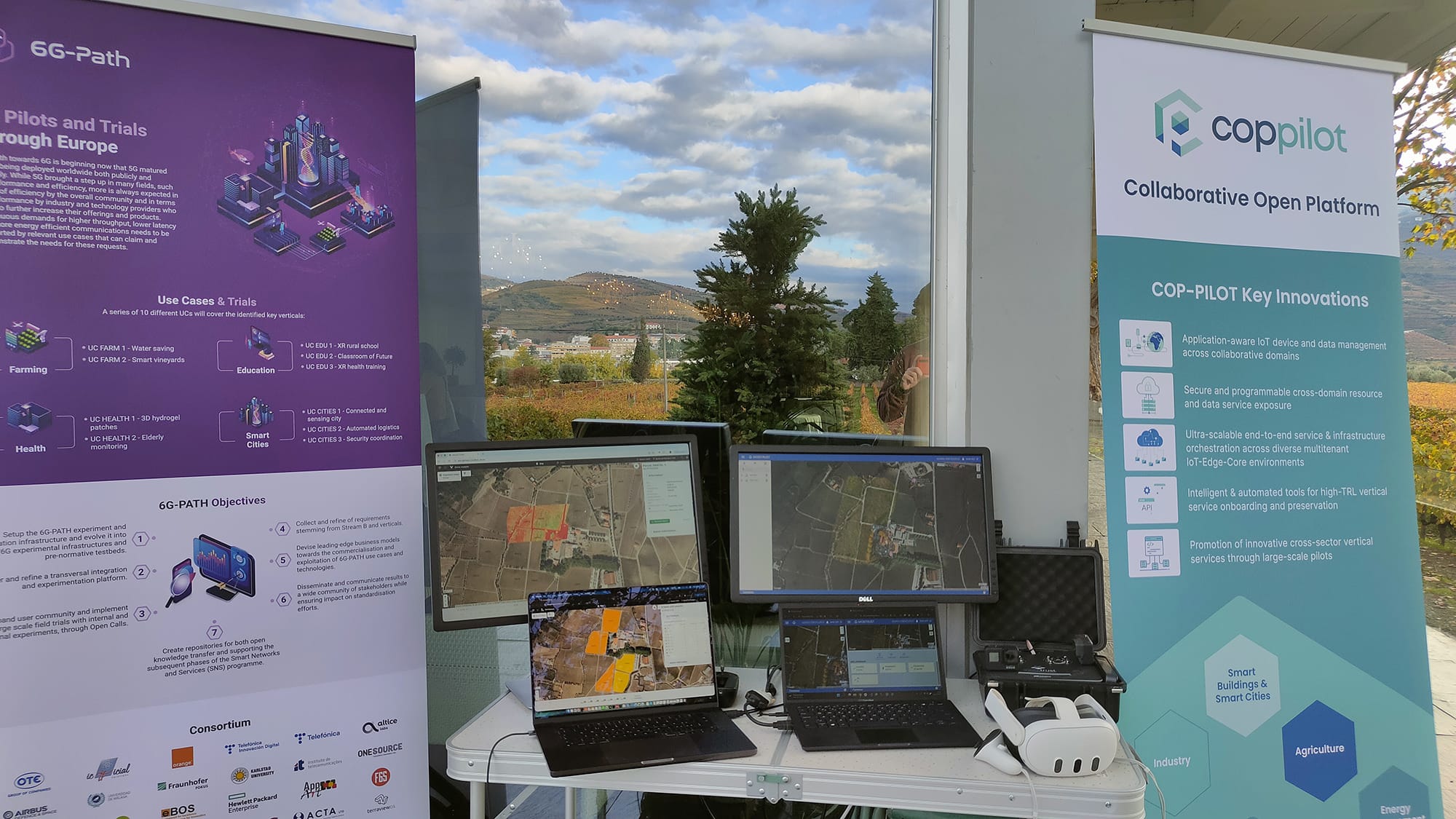
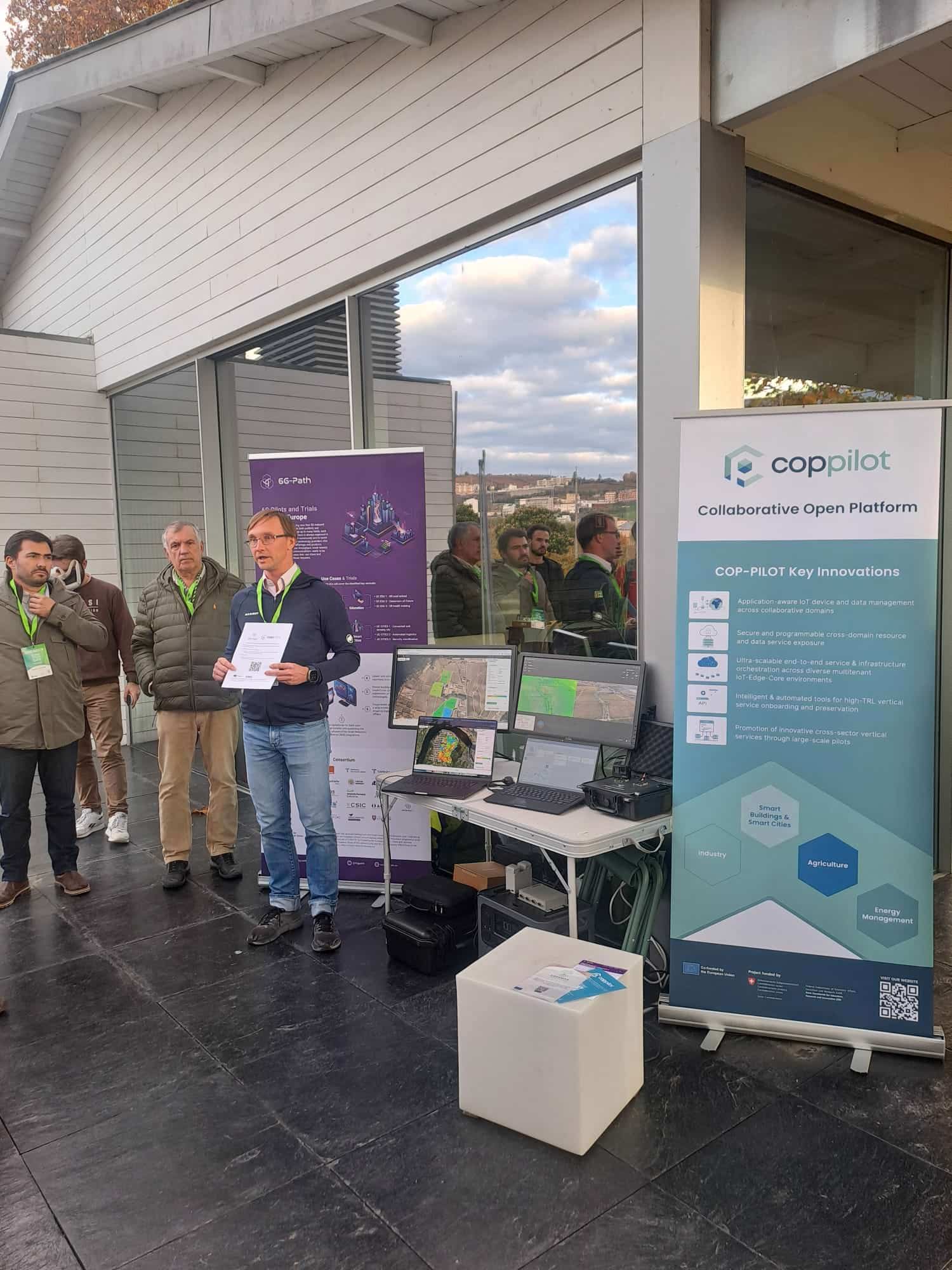
A major milestone for Cluster 4 was the delivery of its first piloting activity, carried out in a live vineyard environment at EuroTech Day 2025 as part of a wider digital innovation programme. This demonstration brought together vineyard, platform, and edge capabilities into a single operational flow, showcasing the Water Utilisation Efficiency use case.
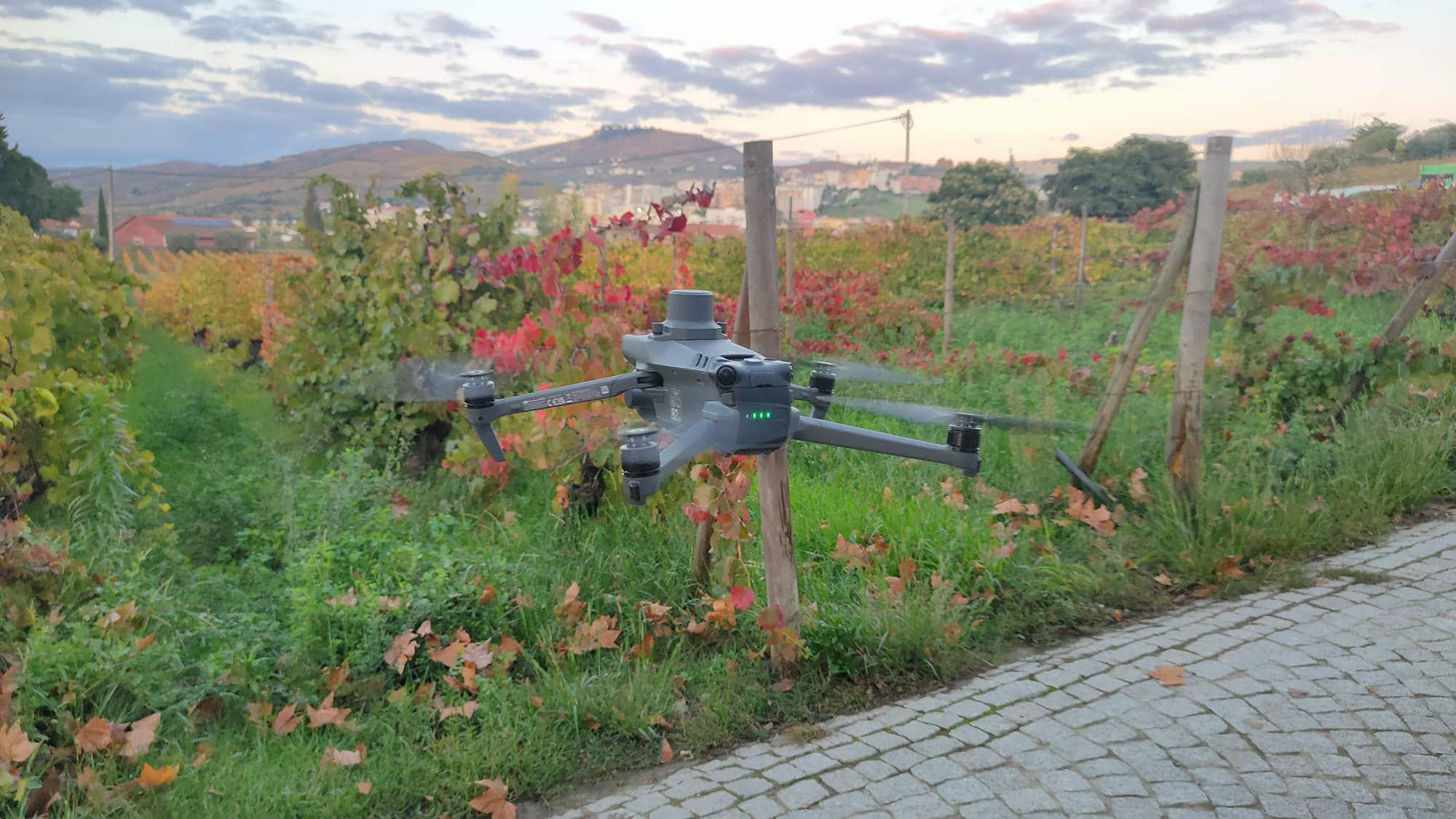
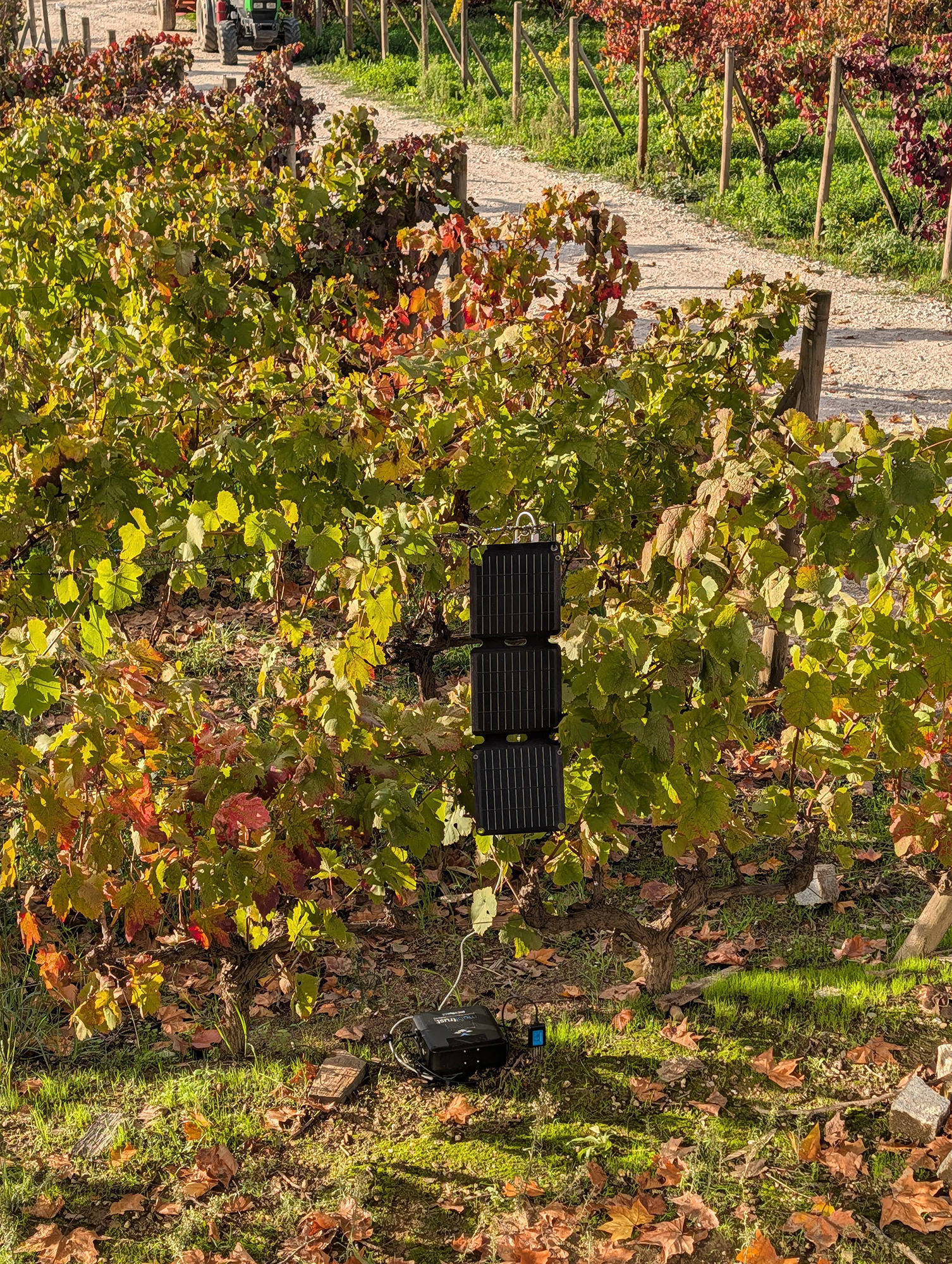
Terraview and Onesource collaborated to combine soil-moisture sensing, drone imaging, and meteorological data into a unified analytic continuum. Soil measurements were exposed using FIWARE data models, drone imagery provided high-resolution views of vine conditions, and weather data added key environmental context. An on-site edge device enabled immediate processing, validating the viability of distributed analytics in real agricultural settings.
These data streams were integrated and visualised within the Terraview platform, illustrating how multi-source information can be transformed into actionable insights for irrigation planning and vineyard intervention scheduling.
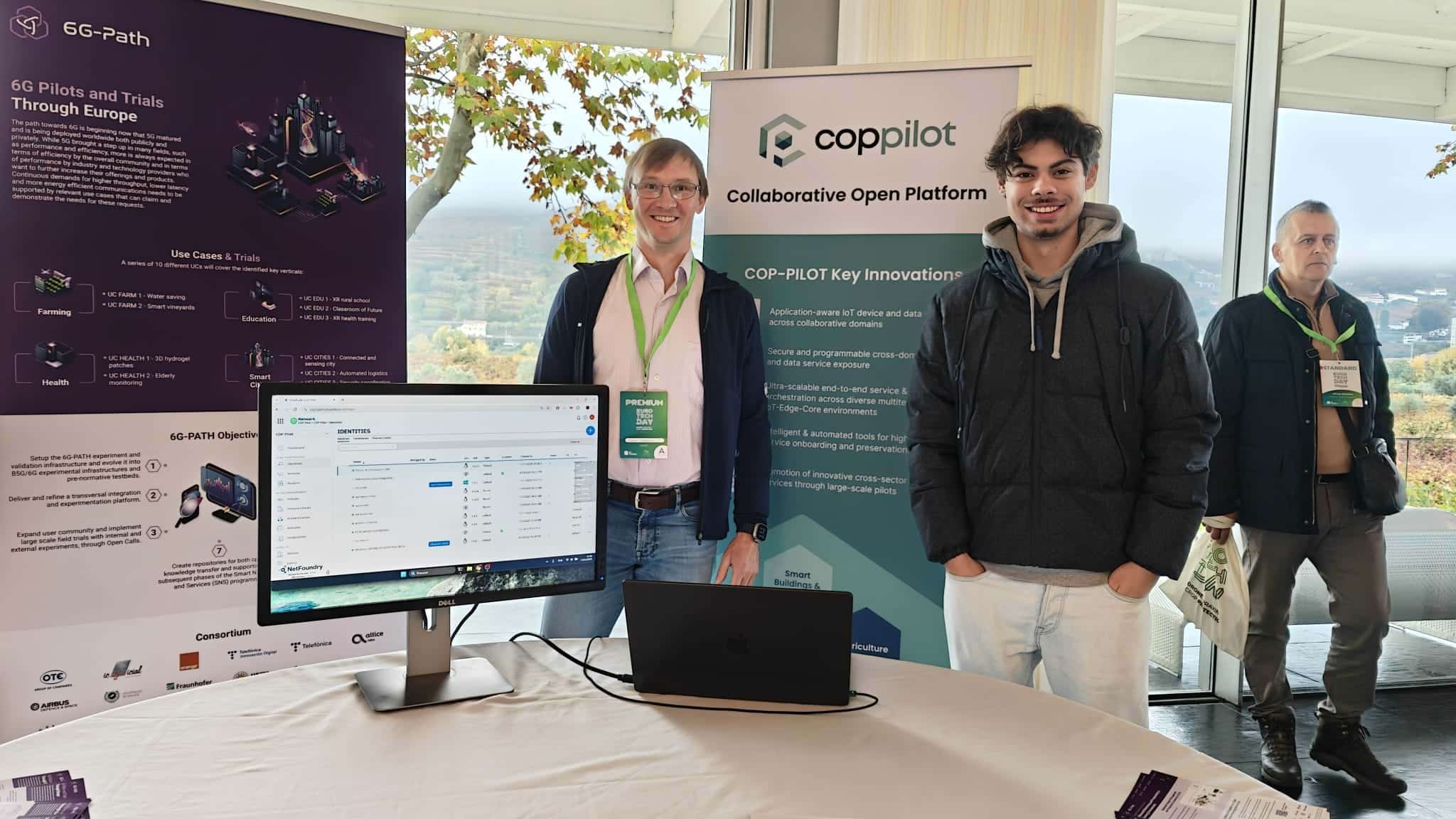
The demonstration exemplified the full COP-PILOT architecture in action. Terraview components were deployed using Maestro and OpenSlice, communications were secured through OpenZiti, and the cluster’s FIWARE-based data management ensured interoperability across domains. The result was a complete, end-to-end execution of the platform’s capabilities, from IoT data ingestion to application-level analytics.
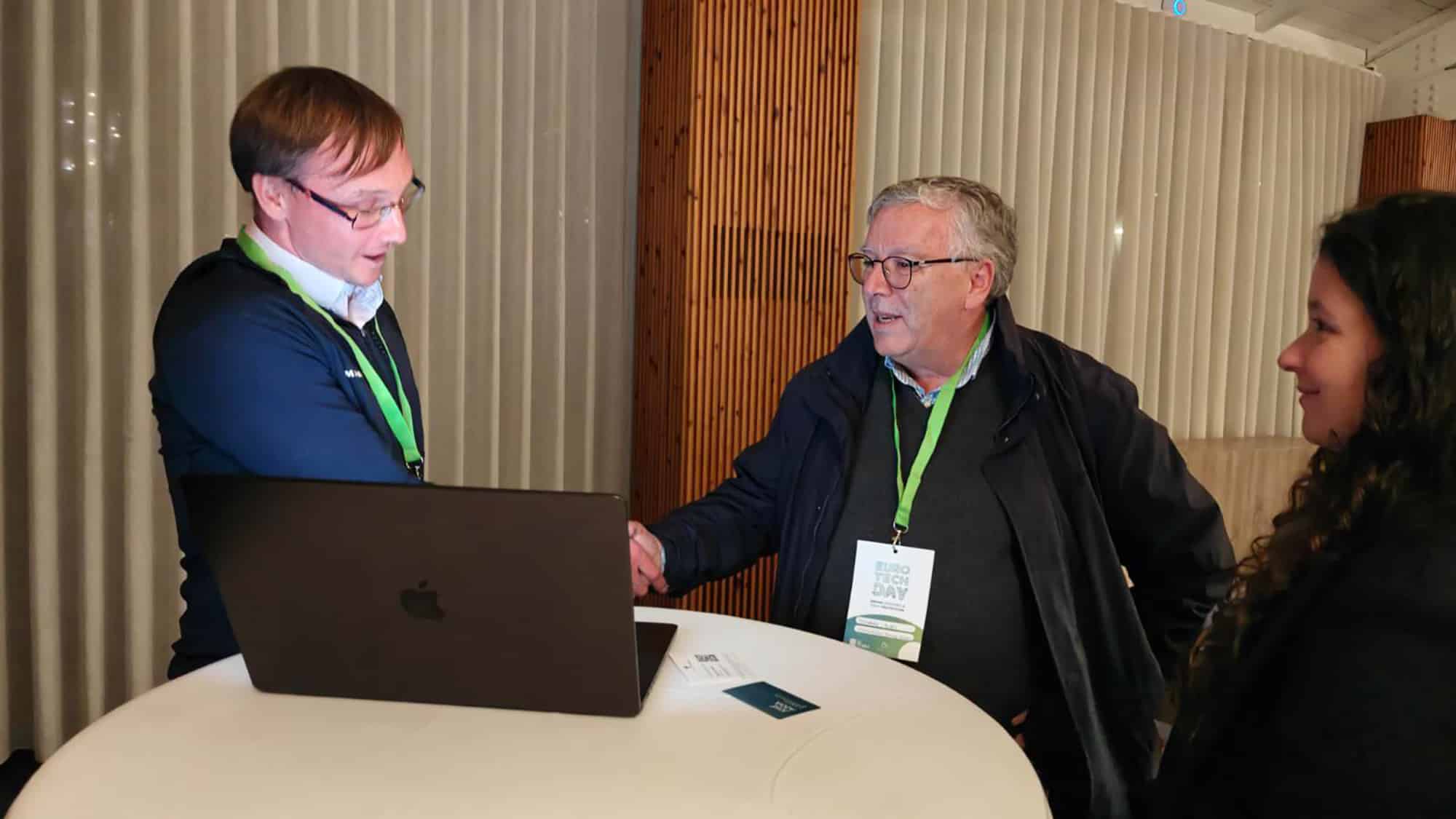
The event brought together agronomists, vineyard managers, researchers, and technology experts. Their feedback underscored not only the accuracy and relevance of the analytics but also the practical value of automated workflows, especially in reducing manual labour and improving decision support. Many highlighted the benefits of combining traditional sensing techniques with drone imagery, an approach that Cluster 4 will continue refining in the next phase.
Looking Forward
With its core infrastructure operational, its first pilots executed, and active engagement underway across the wine sector, Cluster 4 has established a strong foundation for the next cycle of experimentation. The coming months will focus on expanding real-world deployments, refining sensor-to-cloud workflows, and deepening the integration between vineyard, winery, and recycling domains.